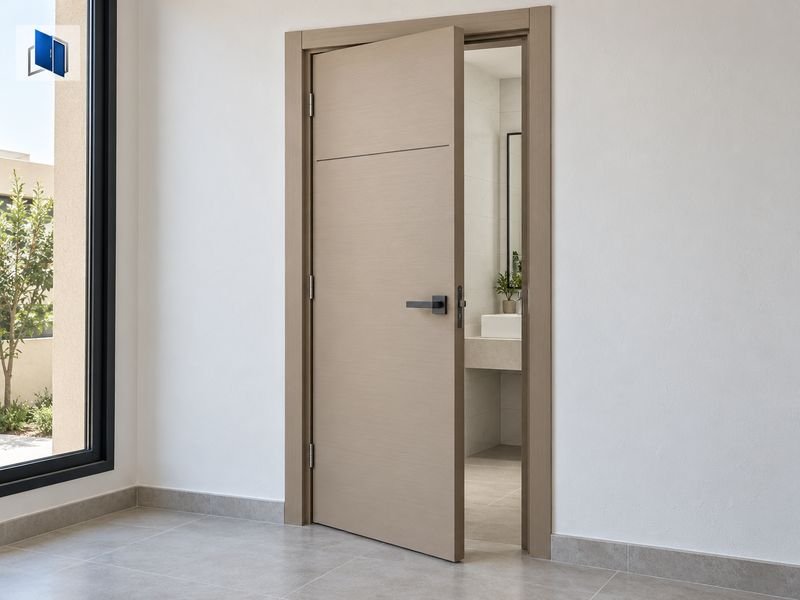

When fitting out a new home or replacing doors, the same question comes up: WPC or wood? The answer depends more on where the door goes and how it is used than on looks alone.
What is a WPC door?
WPC stands for wood-plastic composite — a blend of wood fibre and polymers. The result is a door with the look and grain of timber that is less affected by moisture than natural wood.
Humidity: the biggest difference
Natural timber reacts to water and steam and can swell or warp over time in bathrooms and kitchens. WPC doors resist moisture better, which is why they are often chosen for bathrooms and laundry areas — provided the right product is selected for each use.
Maintenance
- WPC: wipe with a cloth and mild detergent; no repainting.
- Wood: may need treatment or repainting after some years depending on species and use.
- Both benefit from good hinges, handles and precise installation.
Insects and everyday durability
WPC is not affected by insects such as termites the way some timbers are, and it handles frequent use and light knocks in busy homes.
When is wood still a good choice?
For a carved main entrance or a fully natural timber feel in a dry location, solid wood may remain your preference. For bedrooms, bathrooms and kitchens, WPC is the practical choice in most homes.
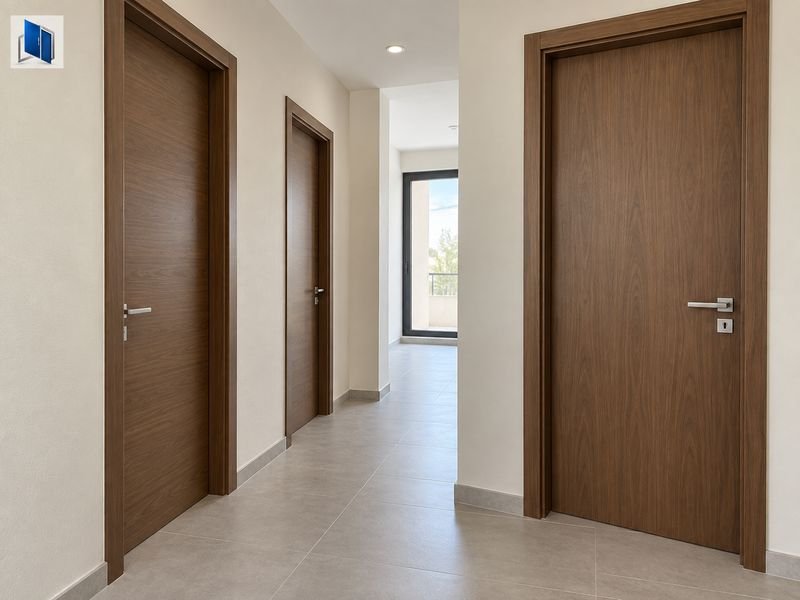
Tip: keep one colour for doors along the same corridor; use darker finishes like walnut in living areas and lighter oak or white in small rooms to make them feel larger.